Good Clinical Practice Program on “Acupressure”
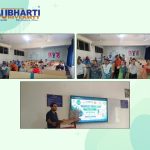
A Good Clinical Practice (GCP) Program on “Acupressure” was organized by the Maharishi Aurobindo Subharti College and Hospital of Naturopathy and Yogic Sciences, Swami Vivekanand Subharti University, Meerut, on 2nd July 2026 from 12:00 PM onwards. The program aimed to strengthen the theoretical knowledge and practical competencies of students in the clinical application of acupressure.
The program was coordinated by Dr. Abhay Kumar, Assistant Professor, Maharishi Aurobindo Subharti College and Hospital of Naturopathy and Yogic Sciences (MASCHNYS).
A total of 27 participants attended the training program. The session was conducted by Dr. Divisha Tyagi, MD Naturopathy (JR-3), who served as the resource person.
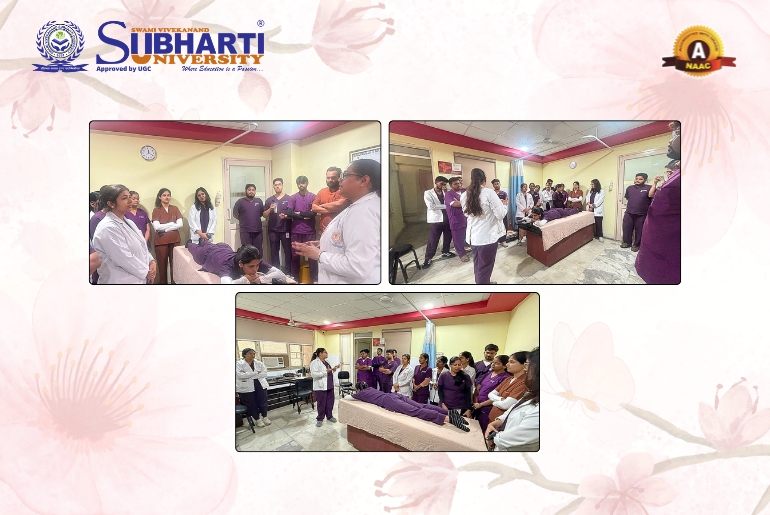
The program commenced with a comprehensive theoretical session introducing the fundamental principles and concepts of acupressure. This was followed by a hands-on practical demonstration of various acupressure techniques, enabling students to observe and understand their correct clinical application.
During the session, the resource person explained the essential prerequisites for administering acupressure therapy, including patient assessment, identification of appropriate acupressure points, correct methods of pressure application, duration of treatment, and post-treatment care. The indications and contraindications of acupressure were also discussed in detail to enhance the participants’ clinical knowledge and clinical decision-making skills.
The session further covered a range of acupressure techniques and their therapeutic applications in the management of various health conditions. Special emphasis was placed on patient safety, infection control and hygiene, ethical clinical practice, and adherence to standard clinical protocols while delivering acupressure therapy.
The program was highly interactive, encouraging active participation from the students throughout both the theoretical and practical sessions. Participants engaged enthusiastically in the demonstrations and practical exercises, which enhanced their understanding of the clinical applications of acupressure and increased their confidence in performing the techniques accurately and safely.
Overall, the Good Clinical Practice Program successfully achieved its objective of enhancing the participants’ theoretical understanding and practical proficiency in acupressure. The training provided valuable clinical exposure and equipped the students with the knowledge and skills required to apply acupressure safely, effectively, and ethically in patient care.