Three-Day Workshop (14th-16th Oct 2026) on ‘Swaraj to Samvidhan: The Making of Modern India’: Revisiting the Forgotten Narratives of India’s Freedom Struggle and Constitutional Journey
Organised by: Department of Liberal Arts & Humanities, Faculty of Arts and Social Sciences (FASS), Swami Vivekanand Subharti University, Meerut, Uttar Pradesh
Workshop Coordinator: Dr. Vibha Rathod, Faculty History
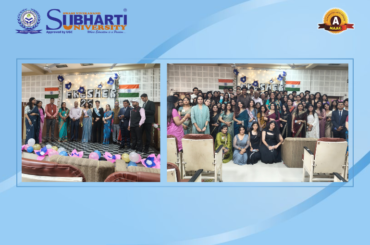
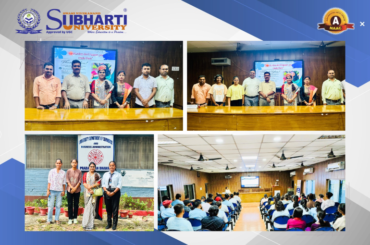
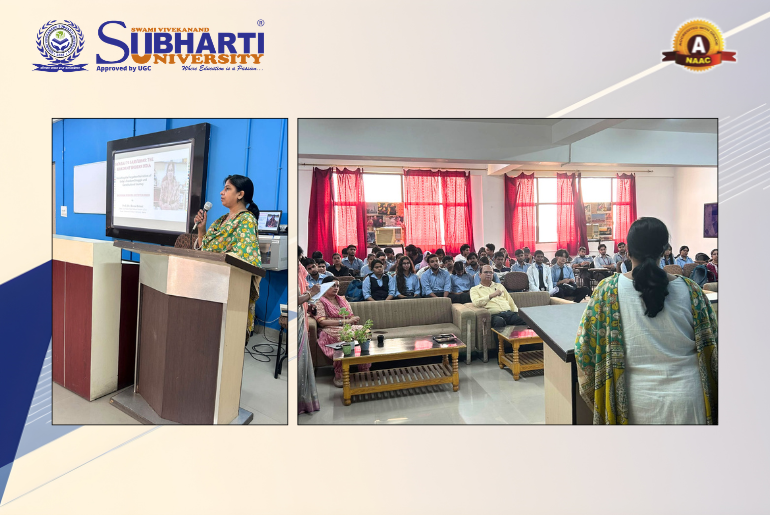
The Department of Liberal Arts & Humanities, Faculty of Arts and Social Sciences, Swami Vivekanand Subharti University, Meerut, organised a three-day academic workshop from 14 to 16 October 2026 under the title ‘Swaraj to Samvidhan: The Making of Modern India – Revisiting the Forgotten Narratives of India’s Freedom Struggle and Constitutional Journey.’
Day-wise proceedings and key academic highlights
Day 1 — 14 October 2026: Inaugural and keynote session on– ‘The Nationalism we forgot: Hidden voices behind India’s Freedom Struggle’.
Resource Person: Prof. (Dr.) Reena Bishnoi, Dean Law, Sardar Patel Institute of Law, Swami Vivekanand Subharti University, Meerut.
The inaugural session explored the historical trajectory of modern India, tracing the emergence of resistance to colonial rule and the broader processes of political transformation and nation-building. The discussion highlighted the relationship between the freedom struggle, changing political consciousness, and the evolution of constitutional ideals.
Key highlights:
- The connection between India’s anti-colonial movement and its constitutional legacy.
- An intellectually stimulating academic exchange that encouraged students to engage critically with historical interpretations.
Day 2 — 15 October 2026
Academic Session on the topic- ‘Beyond the mainstream: Forgotten Movements Regions and People in India’s Freedom Struggle’
Resource Person: Prof. (Dr.) Naveen Gideon, Dean Social Sciences Rani Awantbai State University Sagar.
The second-day session examined regional resistance movements and lesser-known historical actors whose contributions deserve greater recognition in the broader narrative of Indian nationalism. Particular attention was given to the historical significance of Bundelkhand and its resistance traditions.
Key highlights:
- Exploration of the Bundela Revolt and regional resistance to colonial expansion.
- Recognition of Maharaja Chhatrasal and the importance of regional political traditions in understanding resistance.
The session encouraged students to question overly centralised accounts of the freedom struggle and appreciate the diverse geographical and social foundations of Indian nationalism.
Day 3 — 16 October 2026
Academic session on the topic- ‘The Constitution Beyond the Text: Unfinished Dreams and Forgotten Debates of the Constituent Assembly’
Resource Person: Prof. (Dr.) Sushma Trivedi, Navyug Kanya Mahavidhyalya, University of Luchnow.
The concluding academic session focused on the making of the Indian Constitution, the debates that shaped the constitutional framework, and the continuing relevance of constitutional ideals in contemporary India.
Key highlights:
- Understanding the Constituent Assembly as a forum of political negotiation and nation-building.
- Engaging participants through an interactive history quiz featuring questions on Netaji Subhas Chandra Bose, the Indian National Army (INA), its marching song Kadam Kadam Badhaye Ja, and significant personalities and events of the national movement.
The interactive component strengthened historical recall, encouraged active participation, and provided an engaging conclusion to the three-day programme.
Major outcomes of the workshop
- Enhanced awareness of India’s freedom struggle through regional and lesser-known historical narratives.
- Developed a deeper understanding of the relationship between nationalism, resistance, and constitutional development.
- Promoted interactive and interdisciplinary learning among students.
- Strengthened academic interaction between university students and invited scholars.
Conclusion
The three-day workshop, “Swaraj to Samvidhan: The Making of Modern India,” provided a meaningful academic platform for revisiting India’s freedom struggle and examining the historical foundations of its constitutional democracy. By bringing together discussions on colonial resistance, regional movements, overlooked historical actors, and the Constituent Assembly, the programme offered participants a broader and more nuanced understanding of modern Indian history.