Eco-Pledge Program on
Environment Conservation and Sustainability
The Eco Pledge Program organized by Raja Kunwar Singh Department of Library and Information Science, Swami Vivekanand Subharti University on 14 May, 2025 was a significant initiative aimed at fostering environmental consciousness and sustainable practices within the academic community. The primary objectives of this activity were to promote environmental awareness, encourage resource conservation, reduce waste, and cultivate a culture of ecological stewardship among students, faculty, and staff. The program sought to instill a sense of responsibility towards nature, highlighting the interconnectedness of human life and the environment, and motivating participants to adopt eco-friendly behaviors in their daily lives. The Eco Pledge Program was a multifaceted initiative that combined educational, practical, and community-oriented activities. At its core, the program invited participants to make a formal pledge to adopt eco-friendly habits, such as minimizing the use of paper, conserving water and electricity, recycling materials, and using sustainable alternatives in their daily lives. This pledge was not merely symbolic, it was supported by a series of concrete actions and institutional reforms.
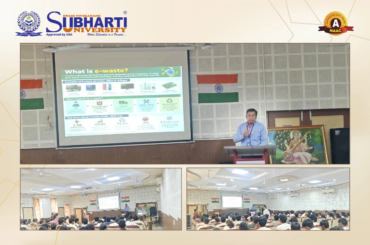
The Eco Pledge Program at Raja Kunwar Singh Subharti Department of Library and Information Science, Swami Vivekanand Subharti University Meerut, began with a welcome address by Dr. Sudhir Tyagi, Dean Faculty of Arts and Social Sciences. In his inaugural speech, Dr. Tyagi highlighted the urgent need for environmental conservation in today’s context. He emphasized that if students become aware and sensitive towards environmental issues, it is possible to provide a clean and safe environment for future generations. . His remarks set the tone for the event, underlining the critical role of youth in shaping a sustainable and healthy future for society.
After the opening address, all participants took an “eco pledge,” collectively resolving to protect the environment. The pledge included commitments such as minimizing the use of plastic, conserving energy, and adopting a simple and sustainable lifestyle. This act was not just ceremonial, it was a call to action for everyone present to make practical changes in their daily lives-like reducing use of plastics, saving electricity, and making environmentally conscious choices. The pledge aimed to inspire lasting behavioral change and personal responsibility towards environmental protection.
Dr. Tyagi also stated that such awareness programs would continue to be organized in the future, emphasizing that ongoing efforts are essential to foster a culture of environmental responsibility not only within the university but also in the broader society. By holding these programs, the university aims to continuously inspire and educate both students and the community about the e importance of environmental stewardship and sustainable living.
The event saw enthusiastic participation from all faculty members, staff and students including Dr. Sapna Sharma, Dr. Alpana, and Mrs. Bhavana, Ms. Swati. Everyone present took part in the program with great enthusiasm and commitment. The vote of thanks was delivered by Dr. Sapna Sharma, expressing gratitude to all participants and organizers for making the event successful. Overall, the Eco Pledge Program successfully achieved its objectives by raising environmental awareness, encouraging sustainable habits, and demonstrating the department’s commitment to environmental protection. The collective participation and positive response from faculty, students, and staff reflected a shared dedication to preserving the environment and set a strong example for future initiatives aimed at environmental conservation.
The outcomes of the Eco Pledge Program were both tangible and transformative. One of the most significant achievements was the marked increase in environmental consciousness among students and staff with highly positive, reflecting a visible shift in attitudes and practices related to environmental protection within the department and across the university. Students and faculty demonstrated increased commitment to environmental conservation by adopting sustainable habits, participating in green initiatives, and supporting the university’s broader environmental goals. Tangible achievements included a reduction in paper and energy consumption, enhanced recycling efforts, and the expansion of green spaces on campus. The program also fostered a sense of community engagement, with students and staff collaborating on projects that contributed to the preservation and enhancement of the local ecosystem. Through these efforts, the department showcased its dedication to environmental stewardship and set a strong example of Paryavaran Sanrakshan Hetu Pratibaddhta for the entire academic community.