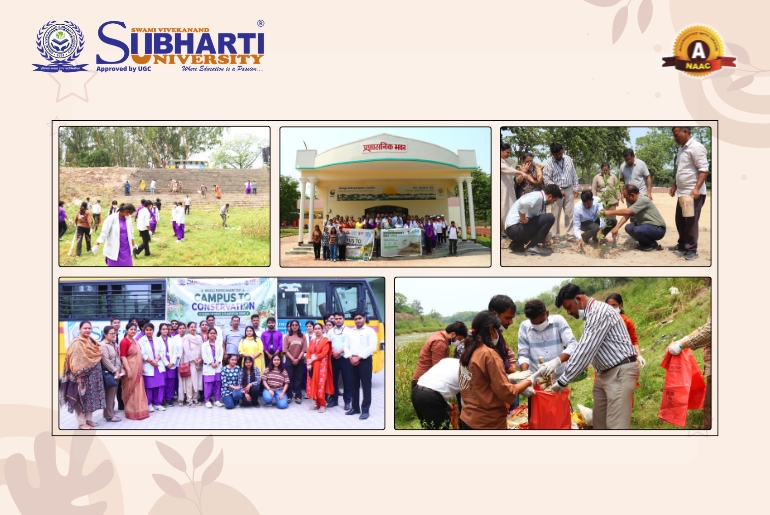
As part of the initiative, students and faculty members conducted a cleanliness drive along the banks of the Middle Ganga Canal. Through voluntary service, participants collected plastic waste, polythene bags, and other solid waste materials scattered in the area. During the campaign, students appealed to the public not to dispose of religious offerings, plastic materials, or other waste directly into rivers and water bodies. They emphasized that environmental responsibility should accompany religious practices and that proper disposal of worship-related materials can significantly contribute to keeping rivers clean and pollution-free.
In the second phase of the programme, participants visited the Forestry Training Centre and explored the Turtle Hatchery. Experts from WWF provided valuable insights into the Ganga ecosystem and the conservation of aquatic species.
Dr. Gaura Chandra Das, Project Officer, Bijnor Project, WWF and Lead – Aquatic Habitat and Species, addressed the students and elaborated on the importance of clean rivers for the conservation of the Ganga Dolphin, Gharial, and other aquatic species. He emphasized that a river is not merely a source of water but a living ecosystem whose protection requires collective efforts from society.
Dr. Aman Ullah Khan, Associate Coordinator, WWF, Bijnor Project, spoke about biodiversity conservation, the relationship between humans and nature, and the growing environmental challenges facing society. He encouraged students to actively participate in environmental conservation initiatives and become responsible stewards of nature.
The programme also included a plantation drive within the Forestry Training Centre campus, where students and faculty members planted saplings. Prof. (Dr.) Mukesh Ruhela, Chairperson of the University Environment Committee, stated that environmental conservation should not be limited to a single day but should become an integral part of a sustainable lifestyle. He urged students not only to plant trees but also to take responsibility for their regular care and maintenance.
Dr. Sanchit Pradhan highlighted the interconnectedness of cleanliness, water conservation, biodiversity protection, and afforestation. He emphasized that environmental conservation begins with maintaining a clean and safe surrounding environment.
The programme was successfully coordinated with the active support of Dr. Neshma, Dr. Shreya Pawar, Dr. Amrita, Dr. Preeti, Dr. Damini, Dr. Priyadarshini, Parth Malhotra, Ashutosh, Dr. Adil, Dr. Monica, and students from various departments of the university. Their collective efforts contributed significantly to the success of the event and reinforced the importance of environmental stewardship among young learners.