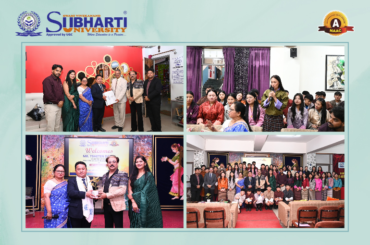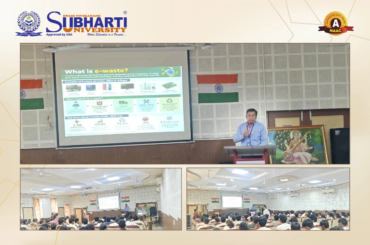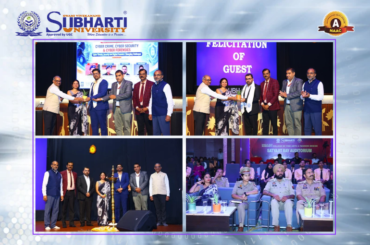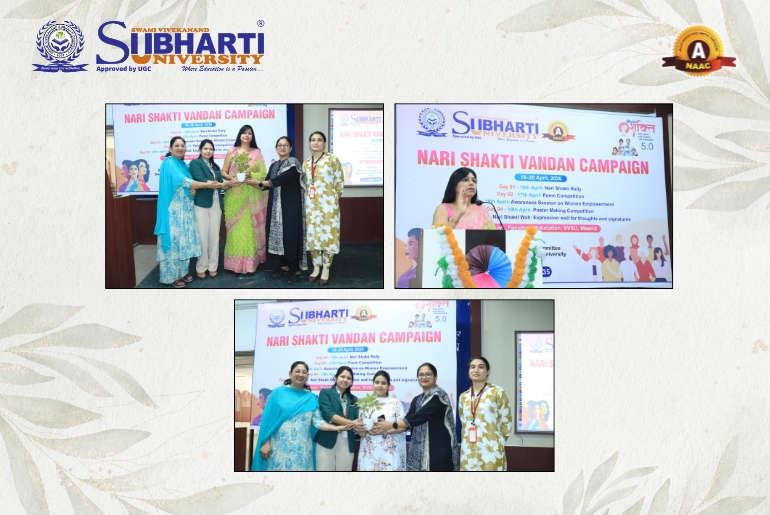
Under the “Nari Shakti Vandan Campaign” (April 16–20), the Women Empowerment Committee of Swami Vivekanand Subharti University, in collaboration with the Gender Sensitization Cell and the Department of Languages, successfully organized an awareness session on women empowerment. The initiative aligns with the vision of Narendra Modi and the Government of Uttar Pradesh to promote gender equality and women’s empowerment.
The session commenced with an introduction by Dr. Manju Adhikari, Secretary of the Women Empowerment Committee, to the Women’s Reservation Act, 2023, reflecting the vision of Narendra Modi of women as the foundation of a strong and progressive nation.
Women Empowerment Committee member and coordinator of the program, Dr. Rafat Khanam emphasized that women’s rights are fundamentally human rights, echoing the 1948 Universal Declaration of Human Rights, which affirms that all individuals are “born free and equal in dignity and rights.” She make it noticeable that despite this universal principle, women and girls continue to face discrimination, inequality, and denial of basic rights such as education, healthcare, and property ownership. She manifested the commitment of Swami Vivekanand Subharti University towards inclusivity that through welfare schemes, awareness initiatives, and concessional support for the girl child Subharti University has been pro-actively working for women empowerment since its inception.
The first speaker of the session, Dr. Afeefa Ateeq, Assistant Professor at the R&D Cell of the University and research scientist at CPHK, presented a critical analysis of structural challenges affecting women’s empowerment. She highlighted issues such as son preference, the disproportionate burden of unpaid care work, and disparities in personal laws related to divorce, inheritance, and guardianship that result in uneven legal protections for women.
The second speaker Dr. Usha Sawhney, Professor in the Department of English at Shaheed Mangal Pandey Government Girls PG College, Meerut, in her address discussed various dimensions of women’s empowerment, stressing that it must move beyond theoretical discourse to grassroots action. She advocated equal opportunities for daughters and sons and emphasized shared responsibilities based on willingness and participation rather than rigid divisions of rights and duties.
The session was enriched by the sharing of lived experiences by non-teaching female staff, who spoke about the challenges of balancing professional and personal responsibilities. Students from the Nursing College and Defence Department also actively participated, sharing real-life experiences and expressing their commitment to promoting awareness of women’s rights.