Folk Colors Flourished at Lokotsav: Literary Symposium and Cultural Program Organized at Subharti
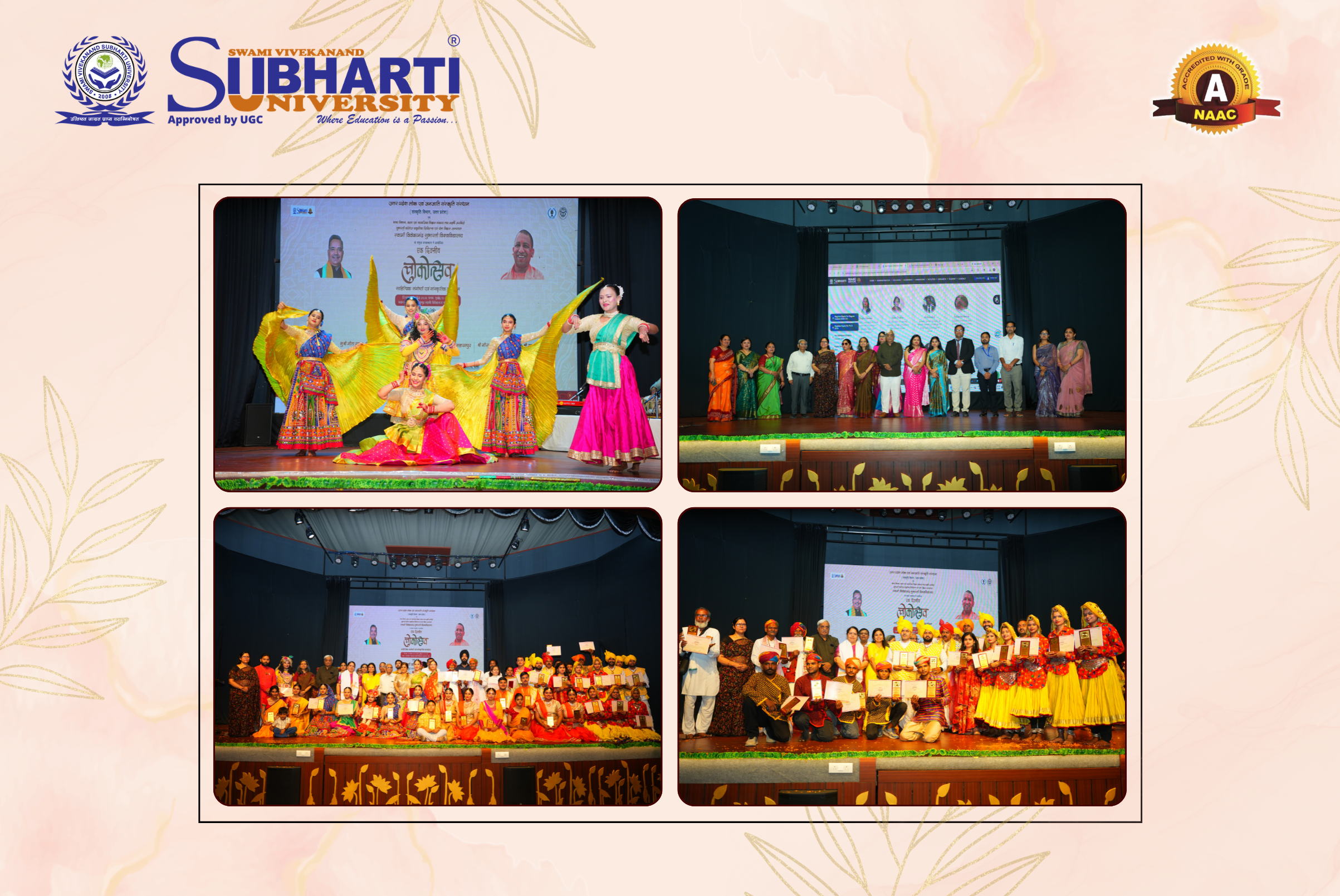
Meerut: A one-day Lokotsav: Literary Symposium and Cultural Program was successfully organized on 28 April 2026 at Satyajit Ray Auditorium under the joint aegis of the Department of Languages, Swami Vivekanand Subharti University, Subharti Naturopathy College (AYUSH Faculty), and Uttar Pradesh Folk and Tribal Culture Institute, Department of Culture, Lucknow.
The inaugural session was graced by former Rajya Sabha Member of Parliament and senior political leader Ms. Kanta Kardam as the Chief Guest. The keynote address was delivered by Dr. Vimlesh Kanti Verma, Linguist, Delhi, Prof. Kusumlata Malik, University of Delhi, participated as the Distinguished Speaker and senior journalist and filmmaker Ms. Sunanda Verma addressed the gathering.
The program was also attended by Prof. (Dr.) Shalya Raj, Chief Executive Officer of the University; Prof. (Dr.) P.K. Sharma, Vice Chancellor; Dr. Munish C. Reddy, Pro Vice Chancellor; Group Captain M. Yaqoob (Retd.), Registrar; Dr. Dhiren Ajit Nair, Principal of Naturopathy College; Dr. Seema Sharma, Head of the Department of Languages and Convener of the Program; and Mr. Atul Dwivedi, Director, Uttar Pradesh Folk and Tribal Culture Institute, Department of Culture, Lucknow, along with many faculty members and dignitaries.
The event commenced with the ceremonial lighting of the lamp before Goddess Saraswati followed by Saraswati Vandana.
Chief Guest’s Address
In her address, Ms. Kanta Kardam appreciated the mesmerizing performances by various folk artists and emphasized that India is rightly known as the land of diversity and unity. She stated that the richness of Indian folk arts and traditions is unparalleled in the world. She stressed the urgent need for the preservation and promotion of folk arts and said that educational institutions and governments together can ensure that folk traditions never disappear.
She praised the efforts of the university in preserving cultural heritage and acknowledged the visionary leadership of the institution’s founder Dr. Atul Krishna and CEO Dr. Shalya Raj for promoting art, culture, and folk traditions.
Keynote Address
Dr. Vimlesh Kanti Verma stated that “Lok” is not limited to rural life or traditions but represents the collective consciousness, culture, and values of society. He explained that folk expression has been passed down through generations through literature, music, art, language, and social customs. He urged the youth to actively participate in preserving and promoting India’s folk heritage.
Distinguished Lecture
Prof. Kusumlata Malik highlighted that the culture of Uttar Pradesh is the soul of Indian civilization and has deeply influenced world culture. She explained that the state’s folk traditions, literature, spirituality, and cultural diversity serve as an inspiration to global society. She emphasized the significance of pilgrimage centers like Kashi, Mathura, Ayodhya, and Prayagraj as centers of peace, wisdom, and humanity.
Special Lecture
Senior journalist and filmmaker Ms. Sunanda Verma, speaking on the theme “Lok Sanskriti: The Story of Us,” said that folk culture is the living expression of our collective identity, traditions, and values. She stressed that folk songs, folk tales, customs, and traditional arts connect society to its roots and promote unity, harmony, and cultural pride.
Cultural Performances
The second session of the program featured vibrant cultural performances including:
- Dance performance on the theme “Lok Mein Ram” by Gaurav Saha and Group from Meerut.
- Algoza Instrument Performance (an endangered folk instrument) by Sukhbir Singh and Team from Mathura.
- Dance presentation on the theme “Lok Mein Krishna” by Ms. Ranjana Neb and Group from Saharanpur
- Folk music performance (Sanskar Geet) by Ms. Neeta Gupta and Group from Meerut
- Haryanvi Folk Dance and Ghoomar by Sheeshpal and Group from Rohtak, Haryana
- Traditional Nat performance by Abdul Hamid and Team from Delhi
Vice Chancellor’s Address
Vice Chancellor Prof. (Dr.) P.K. Sharma stated that folk culture is the essence of “Lok” and without folk art and traditions, society loses its identity. He emphasized the importance of preserving endangered folk traditions and assured that Subharti University remains fully committed to this mission.
All guests and artists were honored with mementos, plants, and traditional angavastram by the university and the Folk and Tribal Culture Institute.
The formal welcome was delivered by Dr. Seema Sharma, Head of the Department of Languages, while the introduction of the theme was presented by Mr. Atul Dwivedi. The event was effectively conducted by faculty members Ms. Soni Chauhan and Ms.Bhavana Joshi.
The organising committee included Dr. Renu Mavi, Dr. Manisha Luthra, Dr. Swati Sharma Dr. Ashish Deepankar, Dr. Nishi Raghav, Dr. Preeti Sharma and Dr. Jyoti Madhur
Several distinguished faculty members including Prof. Amit Kumar, Prof. Pintu Mishra, Prof. R.K. Jain, Dr. Ritesh Chaudhary, Dr. Champalal Mandrele, Dr. Neeraj Nayan Rishi, Dr. Rafat Khanam Dr. Ankit Dr. Yeshpal, Dr Neeraj Narayan Rishi and Mrs. Prajna were also present.
Objectives of the Program
- To preserve and promote India’s rich folk and tribal cultural heritage.
- To create awareness among students and youth about the importance of folk traditions and cultural roots.
- To provide a platform for folk artists from different regions to showcase their talent.
- To encourage academic discussion on literature, folk culture, and social values.
- To strengthen collaboration between educational institutions and cultural organizations.
- To inspire future generations to participate in cultural conservation and promotion.
Outcomes of the Program
- Students gained deeper understanding of folk culture, literature, and traditional values.
- Awareness regarding preservation of endangered folk arts and instruments increased significantly.
- Folk artists received recognition and appreciation for their contribution to cultural preservation.
- Academic interaction between scholars, artists, and students enriched cultural understanding.
- The event strengthened the university’s commitment toward cultural education and heritage conservation.
- Participants were inspired to actively engage in preserving India’s diverse cultural traditions.
The event concluded with the felicitation of guests and artists, leaving participants inspired to actively engage in safeguarding India’s rich cultural heritage.